

Why Pasta Water Is Called “Liquid Gold” (Part 2)
In Part 1, we explored why pasta water is far more than cloudy cooking water. The starch released from the pasta transforms it into a natural ingredient capable of bringing a sauce together in a way plain water never could.
Now let’s look at how to use it the way Italian cooks have for generations.
Always Reserve the Water Before Draining
One of the biggest mistakes home cooks make is realizing they need pasta water only after they’ve poured it down the sink.
Professional cooks never make this mistake.
Before draining the pasta, they always reserve some of the cooking water first.
A coffee mug, measuring cup, or small ladle works perfectly.
Although most recipes only require a few tablespoons, reserving a full cup gives you plenty to work with throughout the cooking process.
If you don’t use it all, simply discard the rest.
It’s much better to have too much than not enough.
When Should You Add Pasta Water?
The timing is just as important as the amount.
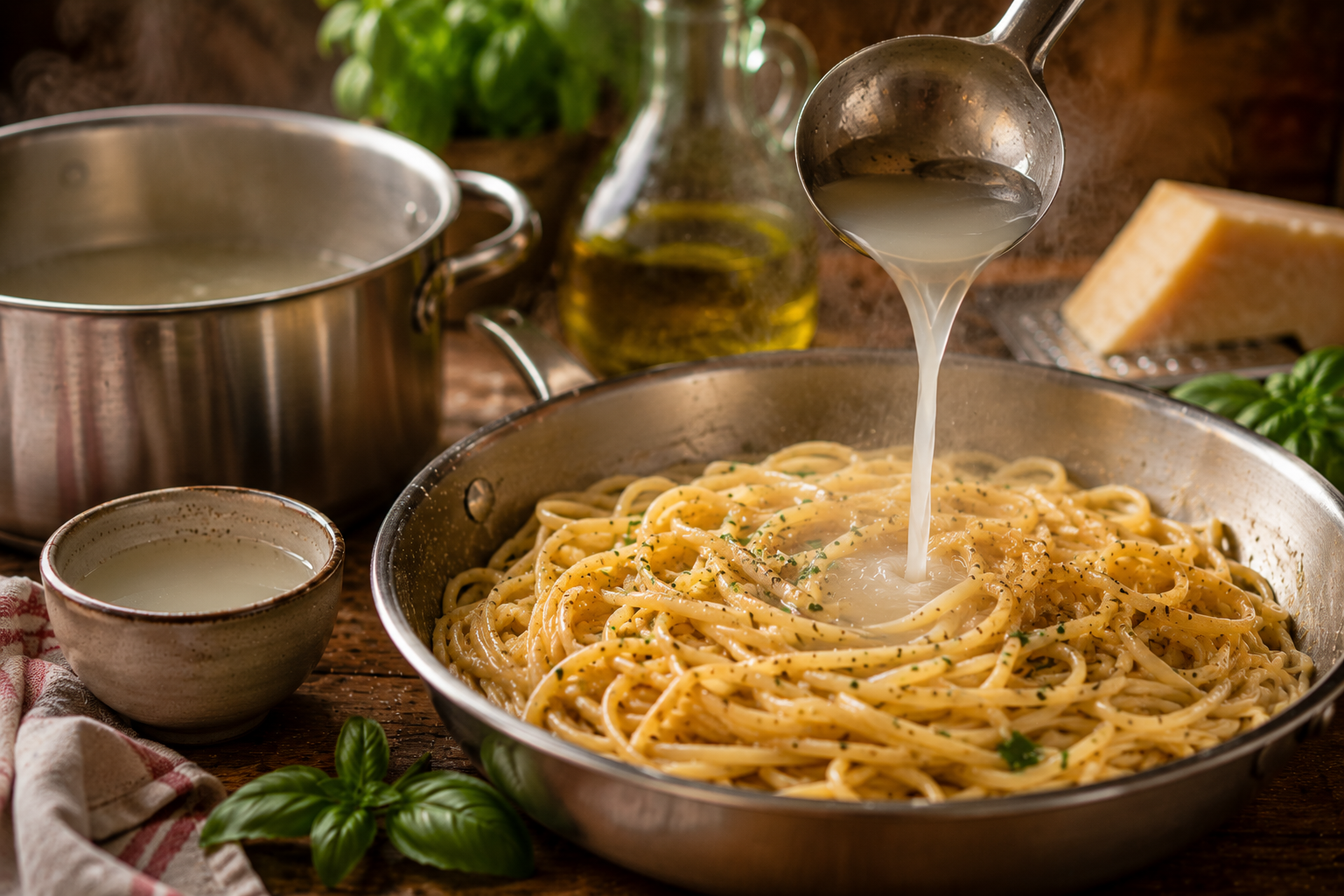
Rather than pouring it directly over plated pasta, Italian cooks typically transfer the nearly finished pasta directly into the pan containing the sauce.
Only then do they begin adding pasta water.
Usually, only a splash is needed at first.
The sauce may seem thinner for a moment, but as it simmers for another minute or two while tossing the pasta, something remarkable happens.
The starch activates.
The sauce becomes glossy.
It clings to every piece of pasta.
The liquid doesn’t water the sauce down—it transforms it.
Start Small
More isn’t always better.
Adding too much pasta water at once can leave a sauce thinner than intended.
Instead, add it gradually.
Think in tablespoons rather than cups.
Toss the pasta.
Watch the sauce.
If it still seems too thick, add another splash.
This gradual approach gives you complete control over the finished consistency.
Many Italian cooks never measure.
They simply observe how the sauce behaves and adjust as needed.
Which Sauces Benefit Most?
Nearly every pasta sauce benefits from reserved pasta water, but some depend on it more than others.
Oil-based sauces, such as Aglio e Olio, become silky instead of oily.
Butter sauces develop a luxurious sheen.
Tomato sauces coat the pasta more evenly.
Cheese sauces become smooth rather than clumpy.
Even hearty meat sauces gain a more unified texture.
The starch acts like an invisible bridge, encouraging every ingredient to work together instead of separating.
Why You Should Never Rinse Pasta
Another habit that often surprises people is that Italians almost never rinse pasta after cooking.
When pasta is rinsed under cold water, the very starch you’ve spent the entire cooking process developing is washed away.
That starch is exactly what helps the sauce cling to the noodles.
Rinsing also cools the pasta immediately, making it more difficult for the sauce to absorb and coat each piece.
The only common exceptions are pasta intended for cold pasta salads or recipes that specifically require cooling the pasta quickly.
For nearly every hot pasta dish, drain the pasta—and move it directly into the sauce.
Fresh Pasta Needs Even More Attention
Fresh pasta cooks much faster than dried pasta, often in only two to four minutes.
Because the cooking window is short, it’s easy to become distracted.
Before you lower fresh pasta into the pot, have your sauce completely finished and ready.
Reserve the pasta water before draining, then transfer the pasta directly into the sauce while it’s still steaming hot.
Those final sixty to ninety seconds of tossing the pasta with the sauce are where much of the magic happens.
Common Mistakes to Avoid
Even experienced home cooks occasionally miss out on the full potential of pasta water.
Some of the most common mistakes include:
- Forgetting to reserve the water before draining.
- Adding too much water all at once instead of gradually.
- Cooking pasta in an excessive amount of water, producing less concentrated starch.
- Rinsing pasta before adding the sauce.
- Pouring pasta water into the serving bowl instead of incorporating it while the sauce is still cooking.
Fortunately, each of these habits is easy to correct.
It’s Not About More Sauce
One of the most beautiful lessons Italian cooking teaches is that great pasta isn’t created by using more sauce.
It’s created by helping the sauce and pasta become one.
Instead of seeing pasta as something covered with sauce, Italian cooks see them as partners.
The sauce should lightly embrace every piece.
Pasta water is one of the simplest tools for achieving that balance.
It creates dishes that feel lighter, silkier, and more refined while using fewer ingredients.
It’s proof that thoughtful technique often matters more than adding more butter, cream, or cheese.
Did You Know?
Many Italian chefs intentionally cook pasta in slightly less water than most package directions recommend. Less water means the released starch becomes more concentrated, producing even more effective pasta water for finishing sauces.
Italian Word of the Day
Mantecare (mahn-teh-KAH-reh)
Meaning: To finish a pasta dish by tossing it with the sauce until everything becomes silky and fully combined.
This final step is one of the hallmarks of authentic Italian cooking. Rather than simply spooning sauce over pasta, the pasta is finished in the pan, often with a splash of reserved pasta water, creating a beautifully unified dish.
Regional Spotlight: Lazio
The region of Lazio, home to Rome, is famous for several of Italy’s most iconic pasta dishes—including Carbonara, Cacio e Pepe, Gricia, and Amatriciana.
Although these recipes use relatively few ingredients, they rely heavily on proper technique. In each case, reserved pasta water plays an essential role in creating the smooth, glossy sauce that defines these classics.
It’s a perfect reminder that Italian cuisine celebrates craftsmanship as much as ingredients.
Pasta Fiore Tip
Before your pasta ever touches the boiling water, place a measuring cup or mug next to the stove.
That simple habit serves as a visual reminder to reserve your pasta water before draining. It takes only a few seconds, but it can dramatically improve the texture and flavor of nearly every pasta dish you make.
From the Pasta Fiore Kitchen
One of the most rewarding moments in learning to make authentic pasta is realizing that the smallest details often produce the biggest improvements.
Pasta water isn’t an expensive ingredient, a secret family recipe, or a specialty product from Italy. It’s something every home cook already has—it simply requires knowing its value.
The next time you make pasta, don’t think of that cloudy water as waste.
Think of it as the final ingredient that brings your entire dish together.
Sometimes the difference between a good plate of pasta and an unforgettable one is only a single ladle of what Italians have long known is liquid gold.