

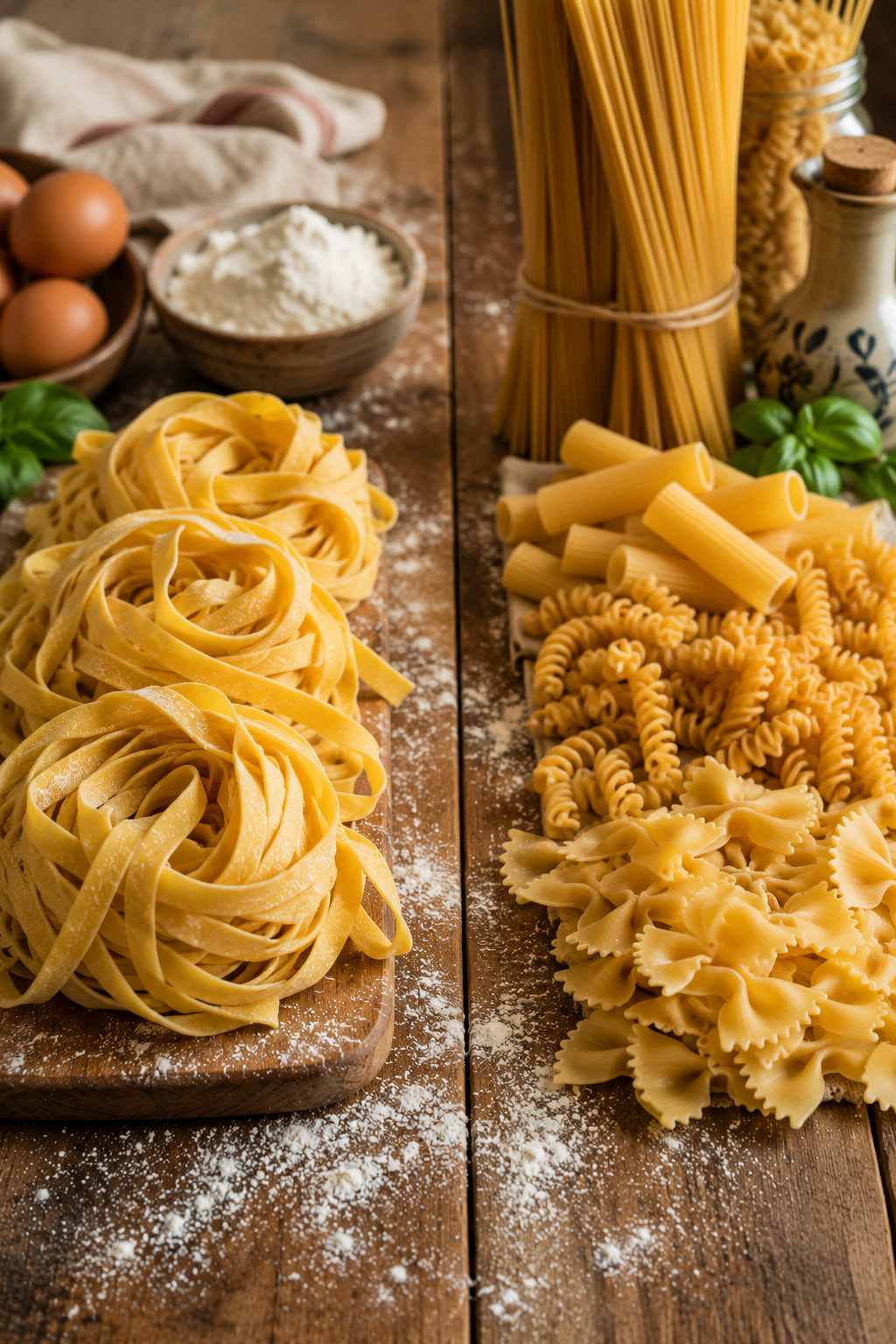
Fresh Pasta vs. Dried Pasta: Understanding the Differences and When to Use Each
Fresh pasta and dried pasta are often treated as though one is automatically better than the other. Fresh pasta is sometimes described as more authentic, more luxurious, or more skillfully made, while dried pasta is viewed as an ordinary pantry ingredient.
That comparison misses the real beauty of Italian pasta.
Fresh and dried pasta are not simply two versions of the same food. They are different styles of pasta with different ingredients, textures, cooking methods, regional traditions, and ideal uses. One is not universally superior to the other. The better choice depends on the dish being prepared, the sauce being served, and the experience the cook wants to create.
Understanding the differences between fresh and dried pasta makes it easier to choose the right pasta intentionally rather than assuming that fresh is always best.
What Is Fresh Pasta?
Fresh pasta is pasta dough that has been shaped and used relatively soon after it is made. It may be cooked immediately, refrigerated for a short period, frozen, or partially dried, depending on the type of pasta and how it will be stored.
Many people associate fresh pasta with eggs, but not every fresh pasta dough contains them. Fresh pasta can be made with:
- Flour and whole eggs
- Flour, egg yolks, and whole eggs
- Semolina flour and water
- Soft wheat flour and water
- Flour, eggs, and vegetable purées
- Regional grain blends and other traditional ingredients
Fresh egg pasta is especially associated with northern and central regions of Italy, including Emilia-Romagna, where handmade sheets are used to create tagliatelle, tortellini, lasagna, cappelletti, and other celebrated pasta shapes.
Water-based fresh pasta is common throughout southern Italy. Shapes such as orecchiette, cavatelli, trofie, pici, and many other regional specialties can be made from simple doughs that do not contain eggs.
Fresh pasta is often rolled, cut, filled, twisted, stamped, or shaped by hand. Its beauty comes from the relationship between the dough and the person making it. Small variations in thickness, shape, and texture are often part of its character.
What Is Dried Pasta?
Dried pasta is made with the intention of removing enough moisture to give the pasta a long shelf life.
Most traditional Italian dried pasta is made from durum wheat semolina and water. Durum wheat is naturally hard, golden in color, and relatively high in protein. It produces pasta that can maintain its structure during drying and cooking.
After the dough is mixed, it may be pushed through a metal die to create shapes such as:
- Spaghetti
- Penne
- Rigatoni
- Bucatini
- Fusilli
- Paccheri
- Linguine
- Mezzi rigatoni
Other dried shapes may be formed, cut, or shaped using different methods.
The pasta is then carefully dried until most of its moisture has been removed. The exact drying process affects its color, aroma, texture, and performance in the kitchen.
Dried pasta is not merely fresh pasta that has been left on the counter for a long time. Commercial dried pasta is usually formulated, shaped, and dried specifically to create a durable product with a particular cooking texture.
The Ingredient Difference
One of the clearest distinctions between many fresh and dried pastas is the type of flour used.
Fresh egg pasta is commonly made with finely milled soft wheat flour, often Italian 00 flour. This creates a smooth and flexible dough that can be rolled into thin sheets without becoming overly tough.
Dried pasta is generally made from durum wheat semolina. Durum wheat gives pasta strength, structure, and the ability to remain firm during cooking.
However, these categories are not absolute.
Fresh pasta can be made with semolina. Dried pasta can contain eggs. Some traditional pastas combine soft wheat and durum wheat flours. Others use buckwheat, chestnut flour, whole grains, legumes, or regional grain varieties.
The important difference is not simply whether the pasta is fresh or dried. It is how the ingredients, shaping method, and moisture content work together to create a particular result.
Texture: Tenderness Versus Firmness
Fresh pasta is often prized for its tenderness.
Well-made fresh egg pasta has a soft, delicate texture that feels almost silky. It can absorb and carry sauce beautifully without requiring a long cooking time. When rolled thinly, it becomes especially suited for filled pastas and layered dishes.
Dried pasta usually provides a firmer and more resilient bite. Properly cooked dried pasta should have structure and a slight resistance in the center. This texture is commonly described as al dente.
The firmness of dried pasta allows it to hold up well in dishes with:
- Thick tomato sauces
- Chunky vegetables
- Olive-oil-based sauces
- Seafood
- Beans and legumes
- Slow-cooked meat sauces
- Strong cheeses
Fresh pasta can also be served with substantial sauces, but its softer structure creates a different eating experience.
This is one reason fresh and dried pasta should not always be used interchangeably. Even when two shapes appear similar, their textures can change the balance of the entire dish.
Fresh Pasta Is Not Always Softer in the Same Way
Not every fresh pasta is delicate.
A fresh semolina-and-water pasta such as cavatelli or orecchiette can be pleasantly chewy and sturdy. Hand-shaped pasta often has thicker areas, ridges, folds, or hollows that create substantial texture.
Likewise, fresh pici can have a dense, satisfying bite because each strand is rolled by hand and is considerably thicker than many ribbon pastas.
Freshness alone does not determine texture. The flour, hydration, thickness, shaping method, and cooking time all matter.
A thin sheet of egg pasta and a thick hand-rolled semolina shape may both be fresh, but they will feel completely different when eaten.
How Cooking Times Differ
Fresh pasta cooks very quickly because it already contains a significant amount of moisture.
Thin fresh noodles may cook in only one or two minutes. Thicker shapes and filled pasta may require more time, but they still generally cook faster than dried pasta.
Dried pasta must absorb water as it cooks. Depending on its shape and thickness, it may take anywhere from several minutes to more than fifteen minutes.
These times should be treated as guides rather than absolute rules. Pasta should be tasted during cooking, especially when it will be finished in a sauce.
Fresh pasta can move from properly cooked to overly soft very quickly. It needs close attention.
Dried pasta provides a slightly larger window for adjusting texture, although it can still become mushy when overcooked.
How Fresh Pasta Works With Sauce
Fresh pasta is particularly well suited to sauces that complement its tender texture.
Classic pairings often include:
- Butter and sage
- Light cream sauces
- Mushroom sauces
- Delicate cheese sauces
- Slow-cooked ragù
- Simple tomato sauces
- Brown butter
- Truffle
- Soft herbs
- Meat or cheese fillings
Wide fresh ribbons such as tagliatelle and pappardelle can support rich sauces because their broad surfaces carry the sauce without requiring deep ridges or hollow centers.
Fresh filled pasta often needs very little sauce. Ravioli, tortellini, and mezzelune already contain flavor inside the dough. A heavy sauce can cover the filling rather than complement it.
For this reason, filled pasta is frequently paired with melted butter, broth, a restrained tomato sauce, or another simple preparation.
The sauce should support the pasta rather than hide it.
How Dried Pasta Works With Sauce
Dried pasta offers tremendous versatility.
Its firm texture allows it to stand up to sauces that might overwhelm more delicate pasta. It also comes in a wide variety of shapes designed to hold, trap, scoop, or carry specific ingredients.
Long dried pasta such as spaghetti and linguine works beautifully with sauces that coat the strands evenly. These may include tomato sauce, olive oil, garlic, clams, seafood, or emulsified cheese sauces.
Tubular shapes such as rigatoni and penne can capture sauce and small pieces of meat or vegetables inside their openings.
Twisted shapes such as fusilli hold pesto, cream sauces, and finely chopped ingredients along their curves.
Shells and cup-like pastas can collect beans, peas, cheese, vegetables, and bits of sauce.
The structure of dried pasta makes it especially useful when the sauce contains multiple textures.
Why Fresh Pasta Is Closely Connected to Filled Pasta
Filled pasta requires dough that can be rolled, sealed, and shaped while still flexible.
Fresh dough provides that flexibility.
A thin sheet can be folded around meat, cheese, vegetables, herbs, squash, or other fillings. The edges can then be pressed together to form a secure seal.
This is how pasta makers create shapes such as:
- Ravioli
- Tortellini
- Cappelletti
- Agnolotti
- Mezzelune
- Caramelle
- Anolini
The dough must be soft enough to shape but strong enough to contain the filling during cooking.
Dried filled pasta does exist, but the handmade filled pastas most people recognize are generally prepared and cooked fresh or frozen soon after shaping.
Regional Traditions Matter
The difference between fresh and dried pasta is also connected to Italian geography.
Northern Italy has historically been associated with softer wheat, eggs, dairy, butter, and rich filled pastas. The region of Emilia-Romagna is especially famous for its fresh egg pasta traditions.
Southern Italy has stronger connections to durum wheat, semolina-and-water doughs, olive oil, tomatoes, and dried pasta production.
Climate, agriculture, trade, economics, and local ingredients all influenced these traditions.
This does not mean northern Italians eat only fresh pasta or southern Italians eat only dried pasta. Italian food culture is far more diverse than that. However, regional agriculture helped determine which kinds of dough became deeply rooted in particular places.
Pasta was shaped by what people could grow, preserve, afford, and prepare.
That history remains visible in the pasta traditions served today.
The Role of Eggs
Eggs contribute fat, protein, moisture, flavor, and color to pasta dough.
The yolks create richness and a golden appearance, while the whites contribute water and protein. Changing the balance of whole eggs and yolks can significantly affect the dough.
A yolk-heavy dough tends to be richer and more tender. A dough made with whole eggs is usually more elastic and economical.
Dried durum-wheat pasta usually does not need eggs to achieve structure. The strength of the wheat and the drying process create firmness without them.
This is why egg pasta and dried semolina pasta behave differently even when prepared in similar shapes.
Is Fresh Pasta More Authentic?
Fresh pasta is authentic.
Dried pasta is also authentic.
Both have deep roots in Italian culinary culture.
Authenticity does not depend on whether pasta was made that morning. It depends on the tradition, ingredients, technique, and context of the dish.
A plate of carefully prepared dried spaghetti can be every bit as traditional and meaningful as handmade tagliatelle.
In some dishes, replacing dried pasta with fresh pasta would actually make the meal less traditional.
For example, many classic long-pasta dishes rely on the firm texture of dried spaghetti, bucatini, or linguine. Fresh egg noodles would change the structure and flavor of the dish considerably.
Authenticity is not about choosing the most expensive or labor-intensive option. It is about understanding why a certain pasta belongs with a certain preparation.
Is Fresh Pasta Healthier?
Fresh pasta is not automatically healthier than dried pasta.
Its nutritional content depends on the flour, eggs, portion size, fillings, sauce, and preparation.
Fresh egg pasta may contain more fat and cholesterol because of the eggs. Dried semolina pasta may provide more protein and a firmer structure. Whole-grain versions of either can offer additional fiber.
The sauce and serving size often have a larger impact on the overall meal than whether the pasta began as fresh or dried.
It is more helpful to think about quality, balance, and portioning than to label one category as healthy and the other as unhealthy.
Is Fresh Pasta Always Better for Special Occasions?
Fresh pasta has a natural sense of ceremony.
The process of mixing dough, rolling sheets, shaping pieces, and sharing the finished pasta can turn a meal into an experience. This is one reason handmade pasta is often associated with family gatherings, holidays, celebrations, and Sunday meals.
However, dried pasta can also create an exceptional special-occasion dish.
A carefully selected bronze-cut pasta served with a slow-cooked sauce, fresh seafood, or beautifully prepared seasonal ingredients can be just as memorable.
The occasion does not come from the moisture content of the pasta. It comes from the thought, skill, tradition, and care behind the meal.
How Storage Differs
Dried pasta is designed for long-term storage. When kept sealed in a cool, dry place, it can remain usable for a considerable amount of time.
Fresh pasta requires more care.
Depending on its ingredients and moisture content, fresh pasta may be:
- Cooked immediately
- Refrigerated briefly
- Frozen
- Dried under controlled conditions
Egg pasta is especially perishable and should not be left at room temperature for extended periods.
Filled pasta often freezes well when arranged in a single layer first and then transferred into a sealed container after it has become firm.
Storage recommendations vary based on the recipe, thickness, filling, environment, and food-safety practices. Home pasta makers should be cautious about relying on appearance alone to determine whether fresh pasta is safe to use.
What About Fresh Pasta Sold at the Grocery Store?
Refrigerated pasta from a grocery store belongs to the broad category of fresh pasta, but it may not behave exactly like pasta made at home.
Commercial refrigerated pasta is designed to maintain quality during transportation and storage. It may contain ingredients or use processing methods that extend its shelf life and improve consistency.
That does not make it inferior. It simply means it is a different product from pasta rolled and cut immediately before cooking.
Consumers should follow the package directions and judge the pasta based on its flavor, texture, and suitability for the dish.
What About Homemade Pasta That Has Been Dried?
Homemade pasta can be dried, but it may still differ from commercially produced dried pasta.
Commercial manufacturers can control temperature, humidity, airflow, dough pressure, and moisture levels with great precision. These conditions are difficult to reproduce completely in a home kitchen.
A homemade egg noodle dried at home may have a longer usable life than freshly cut pasta, but it should not automatically be treated like shelf-stable boxed pasta.
The ingredients and drying method matter.
When making pasta for long-term storage, food safety and moisture control are essential.
When Should You Choose Fresh Pasta?
Fresh pasta is an excellent choice when:
- You want a tender or silky texture
- You are making ravioli or another filled pasta
- The pasta itself is the main focus of the meal
- You want to create a hands-on cooking experience
- You are serving a sauce that complements delicate dough
- You want to explore regional handmade shapes
- You are preparing a special meal with time for shaping and rolling
Fresh pasta is also ideal when the process matters as much as the finished dish.
Making pasta with family, friends, children, or a partner turns cooking into a shared activity. The flour on the table, the imperfect first shapes, and the satisfaction of eating something made together become part of the meal.
When Should You Choose Dried Pasta?
Dried pasta is often the better choice when:
- You want a firm al dente bite
- The sauce contains chunky or substantial ingredients
- You need a pasta shape with tubes, ridges, spirals, or deep hollows
- You are preparing a traditional dish that calls for dried pasta
- You need a dependable pantry ingredient
- You are cooking for a larger group
- You want pasta that holds up well during tossing and finishing
- You are making pasta salad, baked pasta, or a sturdy one-pot preparation
Choosing dried pasta is not a compromise. It is often the most appropriate culinary decision.
Can Fresh and Dried Pasta Be Substituted for Each Other?
Sometimes, but not always.
A fresh ribbon can replace a dried long pasta in certain sauces, but the texture and cooking experience will change.
Fresh pasta absorbs and carries sauce differently. It cooks faster and may release a different amount of starch. It is also more delicate during tossing.
Dried pasta offers more firmness and usually needs more cooking water and time.
When substituting one for the other, consider:
- Cooking time
- Pasta thickness
- Sauce weight
- Amount of pasta water needed
- Final texture
- Portion size
Fresh and dried pasta may also weigh differently for the same serving volume because fresh pasta contains more water.
A direct weight-for-weight substitution does not always produce the same number of servings.
The Importance of Finishing Pasta in the Sauce
Both fresh and dried pasta benefit from being finished briefly with the sauce.
Instead of placing plain pasta on a plate and spooning sauce over it, the pasta can be transferred to the pan shortly before it is fully cooked.
A small amount of pasta water can then be added while the pasta and sauce are tossed together.
This allows:
- The sauce to cling more evenly
- Starch to help create an emulsion
- The pasta to absorb flavor
- The final texture to be adjusted
- The pasta and sauce to become one complete dish
Fresh pasta requires a gentler touch because it is more delicate. Dried pasta usually tolerates more vigorous tossing.
The goal is not simply to combine two separate components. The goal is to let the pasta and sauce finish cooking together.
How to Choose Between Fresh and Dried Pasta
Before deciding, ask a few simple questions.
What texture do you want?
For soft, tender, or silky pasta, choose fresh egg pasta. For a firmer bite, choose dried durum-wheat pasta. For something chewy and rustic, consider a fresh semolina-and-water shape.
What kind of sauce are you serving?
Delicate butter, cream, mushroom, or filled-pasta preparations often work beautifully with fresh pasta. Chunky tomato sauces, seafood, vegetables, beans, and bold olive-oil sauces frequently benefit from dried pasta.
Does the traditional dish call for a specific pasta?
Whenever possible, begin with the pasta traditionally associated with the dish. The pairing often exists because generations of cooks discovered that it works.
How much time do you have?
Fresh handmade pasta requires preparation, shaping, workspace, and cleanup. Dried pasta provides convenience without sacrificing quality when chosen and cooked carefully.
What experience do you want?
Sometimes the joy is in spending an afternoon rolling and shaping dough. Other times, the goal is to prepare a beautiful meal efficiently. Both are worthwhile.
Two Different Traditions, Both Worth Celebrating
Fresh and dried pasta should not be placed in competition with each other.
Fresh pasta offers tenderness, craftsmanship, flexibility, and a strong connection to handmade traditions. Dried pasta offers structure, versatility, convenience, and an extraordinary range of shapes designed for specific sauces and ingredients.
Each tells part of the story of Italian food.
The best pasta is not always the freshest pasta. It is the pasta that makes sense for the dish, respects the ingredients, and creates the texture the cook intends.
Once you understand that difference, choosing pasta becomes more than reaching for a familiar box or assuming handmade is automatically better. It becomes a thoughtful part of building the meal.
That is one of the most valuable lessons pasta can teach: simplicity does not mean sameness. A few basic ingredients—flour, water, eggs, and time—can produce entirely different traditions, each with its own purpose, personality, and place at the table.