

Egg Pasta vs. Water Pasta: Why Italy Uses Both (Part 2)
In Part 1, we explored how geography, climate, and agriculture shaped Italy’s two great pasta traditions. Northern Italy embraced rich egg doughs, while much of southern Italy perfected pasta made from nothing more than semolina flour and water.
Now the question becomes one every home cook eventually asks:
Which one should you choose?
The answer isn’t based on which dough is “better.” Instead, it’s about understanding what each dough was designed to do.
Once you recognize that purpose, pairing pasta with the right sauce becomes much more intuitive.
The Right Dough for the Right Dish
Imagine trying to wear hiking boots to a formal wedding.
They’re excellent shoes—but not for that occasion.
The same idea applies to pasta.
Every traditional Italian dough was developed to complement certain ingredients, cooking methods, and regional cuisines.
Egg pasta excels when richness is already part of the dish.
Water pasta shines when the sauce deserves to take center stage.
Neither competes with the other.
Instead, they create balance.
Why Egg Pasta Loves Rich Sauces
Egg pasta is naturally smooth, supple, and luxurious.
Its silky texture makes it ideal for sauces that coat rather than pool.
Classic examples include:
- Slow-cooked Bolognese ragù
- Brown butter with sage
- Cream-based mushroom sauces
- Parmigiano Reggiano butter sauces
- Truffle butter
- Prosciutto and peas
- Delicate filled pastas served in butter
Wide ribbons like tagliatelle and pappardelle provide broad surfaces that allow rich sauces to cling evenly from end to end.
The tenderness of the dough creates a harmonious bite where neither the pasta nor the sauce overpowers the other.
This is one reason you’ll almost never find authentic Bolognese served over spaghetti in Bologna itself. Traditionally, that famous meat sauce is paired with fresh egg tagliatelle because the two were developed together over centuries.
Why Water Pasta Excels with Simpler Sauces
Semolina-and-water dough offers a noticeably different eating experience.
Its slightly firmer bite creates contrast.
Its rougher surface captures sauce exceptionally well.
This makes it perfect for dishes built around olive oil, tomatoes, vegetables, seafood, legumes, and robust flavors.
Traditional pairings include:
- Orecchiette with broccoli rabe and sausage
- Trofie with basil pesto
- Cavatelli with tomato and ricotta salata
- Pici with garlic and olive oil
- Busiate with Sicilian pesto Trapanese
- Spaghetti aglio e olio
- Bucatini all’Amatriciana
Rather than melting into the sauce, these pastas contribute their own texture to every bite.
That pleasant chew is intentional.
It’s part of the experience.
Texture Is the Secret Ingredient
When people think about pasta, they often focus on flavor.
Italian cooks often think about texture first.
Texture determines how a sauce behaves.
A smooth ribbon allows butter and cheese to glide evenly across every strand.
Deep ridges trap hearty ragù.
Little cups cradle peas, beans, sausage, or vegetables.
Twists hold pesto between their spirals.
The dough itself influences that experience.
Egg pasta creates softness and elegance.
Water pasta creates structure and resilience.
Understanding this distinction changes the way you choose pasta forever.
Common Myths About Egg and Water Pasta
Like many traditional foods, pasta has accumulated its share of misconceptions.
Let’s clear up a few of the most common.
Myth #1: Egg Pasta Is More Authentic
Perhaps the biggest myth of all.
Authenticity in Italian cooking isn’t determined by the number of eggs in a recipe.
It’s determined by whether the recipe respects the traditions of the region it comes from.
An egg-rich tagliatelle from Emilia-Romagna is authentic.
A semolina orecchiette from Puglia is equally authentic.
Both represent centuries of culinary history.
Myth #2: Water Pasta Is Inferior
Some people assume water dough exists because eggs were unavailable.
While eggs were certainly more expensive in some regions, southern Italians continued making water pasta even when eggs became readily available.
Why?
Because semolina dough produces the texture they wanted.
The recipe survived because it works—not because it was a compromise.
Myth #3: Fresh Pasta Always Contains Eggs
Fresh pasta simply means it hasn’t been dried.
It says nothing about the ingredients.
Many fresh pastas throughout southern Italy contain only flour and water.
Likewise, some egg pasta can be dried.
Fresh and dried describe the condition of the pasta.
Egg and water describe the dough itself.
They’re completely different classifications.
Myth #4: More Eggs Make Better Pasta
Extra yolks certainly create a richer dough.
But richer doesn’t always mean better.
Too much richness can overpower delicate seafood or fresh vegetable sauces.
Sometimes a simpler dough produces a more balanced meal.
Italian cooking has always favored harmony over excess.
Learning to Read the Dish
One of the most rewarding skills a pasta maker develops is learning to work backward.
Instead of asking,
“Which pasta should I make?”
Ask,
“What kind of meal do I want to create?”
If you’re planning a luxurious Sunday dinner with a slow-simmered ragù, handmade tagliatelle may be the perfect choice.
If you’re celebrating summer tomatoes, basil, and olive oil, a rustic semolina pasta may better highlight those ingredients.
The dough becomes another ingredient in the recipe—not merely a vessel for the sauce.
Did You Know?
Many Italian families have passed down separate dough recipes for different holidays.
An egg-rich dough may appear on Christmas or Easter tables for filled pasta like tortellini or ravioli, while everyday meals throughout the year might feature simple semolina-and-water pasta. Both recipes are treasured—not because one is considered superior, but because each belongs to a different tradition.
Italian Word of the Day
Pasta di Semola (PAH-stah dee SEH-moh-lah)
Literally translated, it means “semolina pasta.”
This phrase commonly refers to pasta made primarily from durum wheat semolina and water. It represents one of Italy’s oldest and most enduring pasta traditions, especially throughout the south.
Regional Spotlight: Puglia
If Emilia-Romagna is celebrated for egg pasta, Puglia is one of the great homes of semolina-and-water dough.
Golden fields of durum wheat stretch across the region, providing the flour that has sustained generations of pasta makers.
Walk through the narrow streets of Bari, and you may still see local women shaping orecchiette by hand outside their homes—a tradition that has become one of the region’s most recognizable culinary symbols.
Each piece is formed with remarkable speed, using little more than a knife, practiced hands, and dough made from flour and water.
It’s a beautiful reminder that extraordinary food doesn’t require complicated ingredients—only skill, patience, and tradition.
Pasta Fiore Tip
If you’re just beginning your pasta-making journey, don’t choose between egg dough and water dough.
Learn both.
Each one teaches different skills, develops different instincts, and expands your understanding of how pasta behaves. The more familiar you become with both traditions, the easier it becomes to choose the right dough for the meal you want to create.
From the Pasta Fiore Kitchen
One of the most beautiful lessons Italian pasta teaches us is that there isn’t just one “right” way to make it.
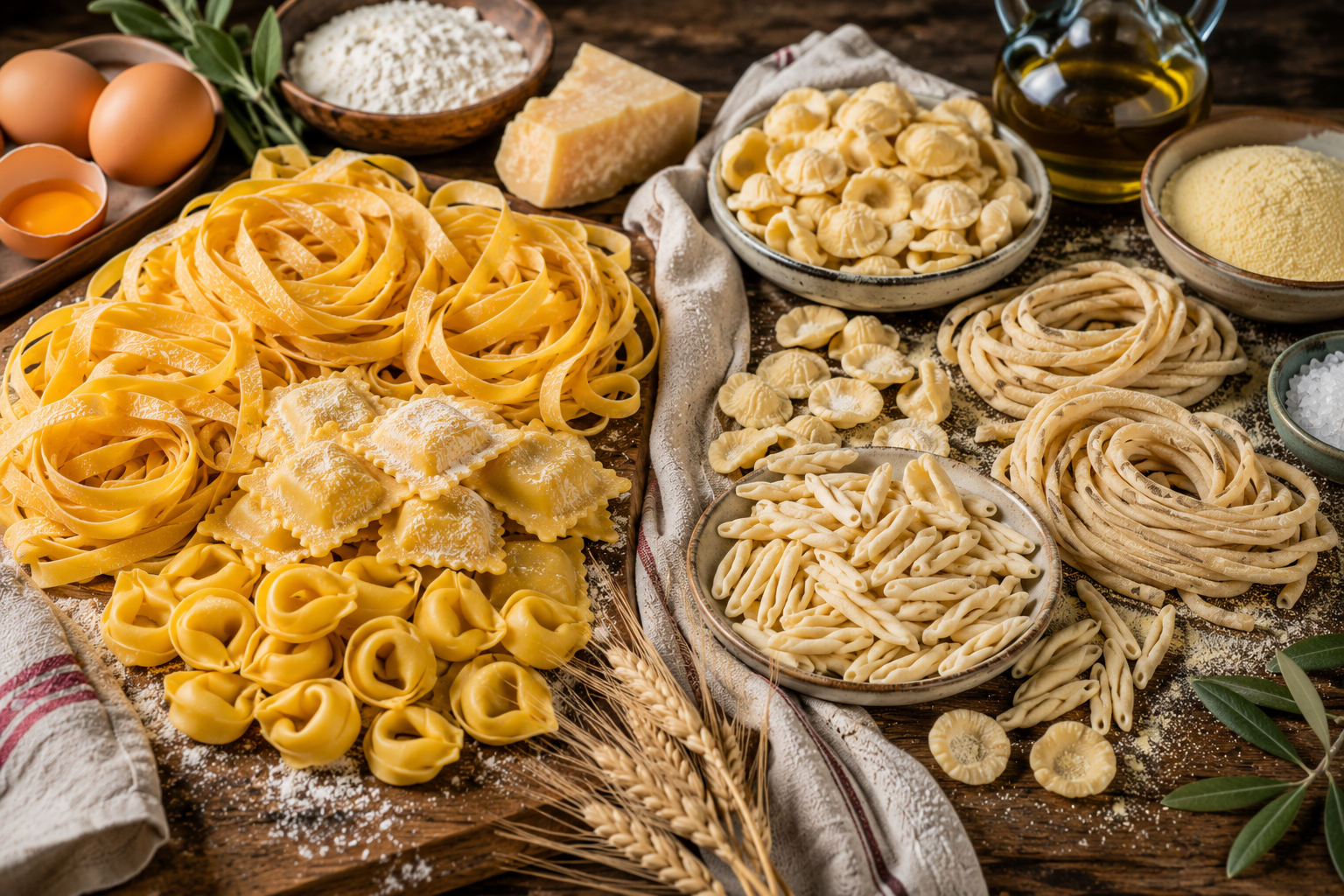
The golden ribbons of northern Italy and the rustic semolina shapes of the south tell different stories, shaped by different landscapes, harvests, and families. Neither is trying to imitate the other.
When you understand why those traditions developed, you’re no longer following recipes—you’re preserving a small piece of Italy’s culinary heritage every time you knead a ball of dough.
And perhaps that’s the greatest joy of handmade pasta: not simply making dinner, but continuing a tradition that has connected families around the table for generations.