

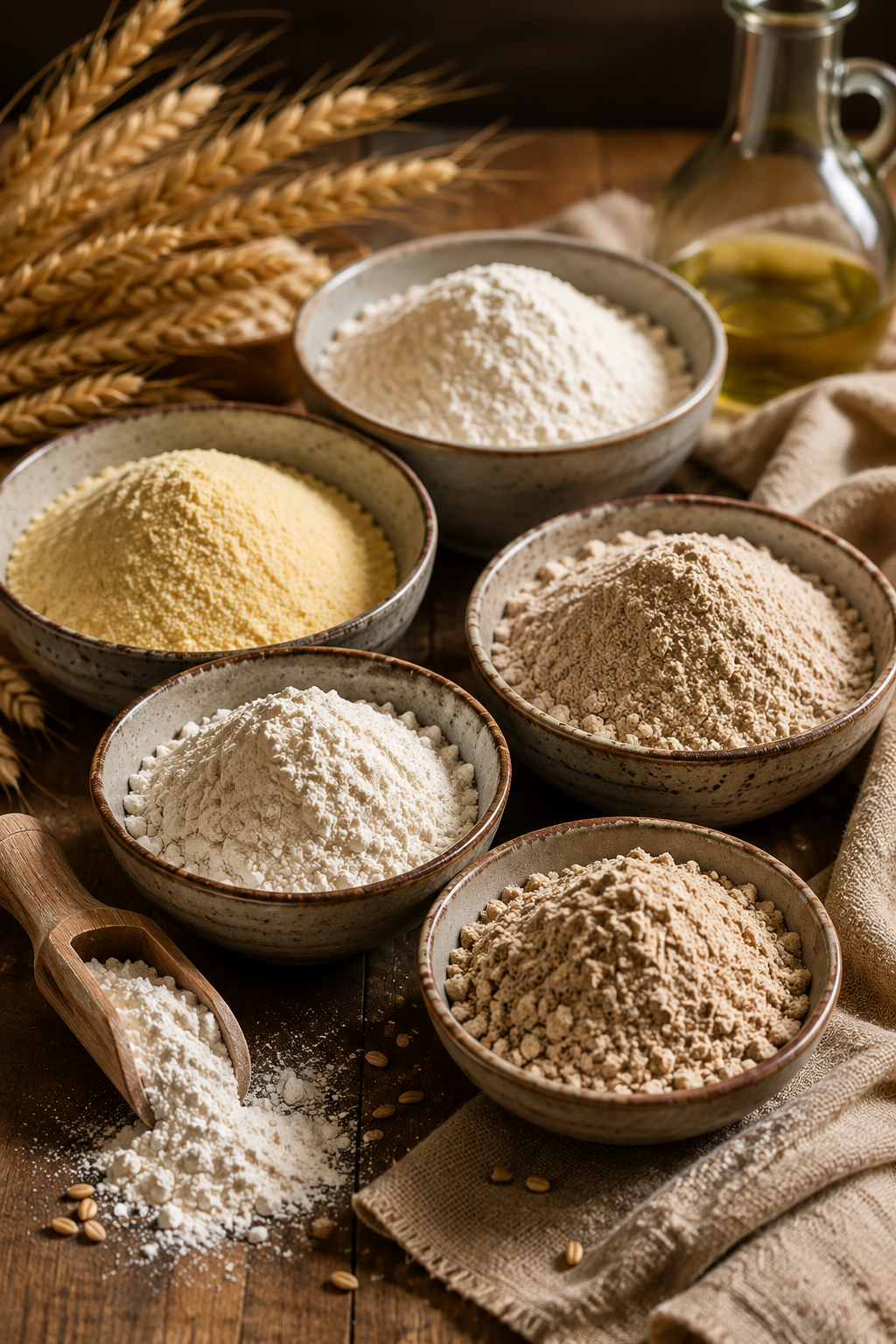
The Complete Guide to Pasta Flour: Choosing the Right Flour for Every Dough
Walk into an Italian kitchen, and you’ll quickly notice something surprising—there isn’t just one bag of flour sitting on the counter.
In fact, one of the biggest differences between homemade pasta that feels ordinary and pasta that feels extraordinary often comes down to something incredibly simple: the flour.
Different flours create completely different textures, colors, elasticity, and flavors. Understanding how each behaves allows you to intentionally create the kind of pasta you want instead of hoping for the best.
Let’s break down the most common flours used for pasta making and when each shines.
Italian 00 Flour
If you’ve spent any time looking at authentic pasta recipes, you’ve probably encountered “00 flour.”
The “00” doesn’t refer to the grain itself—it refers to how finely the flour has been milled.
Because it is exceptionally fine, 00 flour creates dough that feels silky, smooth, and incredibly easy to roll. It absorbs moisture evenly and produces pasta with a delicate texture.
Best for:
- Tagliatelle
- Pappardelle
- Lasagna sheets
- Ravioli
- Tortellini
- Cappelletti
Many Northern Italian egg pastas rely heavily on 00 flour because they are meant to be tender rather than chewy.
Semolina Flour
Semolina comes from durum wheat, one of the hardest wheat varieties grown.
Its golden color, higher protein content, and slightly coarse texture create pasta with more bite and structure.
This is the flour traditionally used throughout Southern Italy for many water-based doughs.
Semolina gives pasta:
- More chew
- Better cooking stability
- Rich golden color
- Rustic texture
Perfect for:
- Orecchiette
- Cavatelli
- Trofie
- Busiate
- Malloreddus
- Many dried pasta styles
Durum Wheat Flour
Many people confuse semolina and durum flour.
Both come from the same wheat, but durum flour is ground much finer.
Think of it as the smoother cousin of semolina.
It offers many of the same benefits while producing a dough that’s easier to work with for home pasta makers.
Great for:
- Extruded pasta
- Hand-shaped pasta
- Mixing with 00 flour
All-Purpose Flour
Can you make pasta with all-purpose flour?
Absolutely.
Millions of home cooks do.
While it won’t create quite the same texture as specialty Italian flours, it produces excellent pasta and is often the easiest option when you’re just getting started.
Its moderate protein level creates dough that’s forgiving and versatile.
Ideal for:
- Beginner pasta makers
- Simple noodles
- Everyday family meals
Whole Wheat Flour
Whole wheat flour contains the entire grain, including the bran and germ.
This adds:
- More fiber
- More nutrients
- Earthier flavor
- Darker color
The trade-off is that bran cuts through gluten strands, making the dough slightly less elastic.
Many pasta makers combine whole wheat with 00 or all-purpose flour to create a dough that’s both nutritious and workable.
Ancient Grain Flours
Italy has a long tradition of regional grains that predate modern wheat varieties.
Some examples include:
- Einkorn
- Emmer (Farro)
- Spelt
- Kamut
These grains create pasta with rich, nutty flavors and slightly different textures.
While they require a little more practice to work with, they connect modern kitchens with centuries of Italian tradition.
Should You Mix Flours?
Many experienced pasta makers rarely rely on just one flour.
Instead, they blend different flours to balance texture, elasticity, and flavor.
Some popular combinations include:
- 50% 00 + 50% Semolina
- 75% 00 + 25% Durum
- 50% Whole Wheat + 50% 00
Experimenting with blends allows you to create pasta that’s uniquely your own.
Which Flour Should Beginners Buy?
If you’re buying only one flour to begin making pasta, start with either:
- Italian 00 flour for silky egg pasta
- Semolina flour for rustic Southern Italian pasta
Eventually, keeping both in your pantry opens up a world of possibilities.
Flour Is Just the Beginning
Every region of Italy developed pasta around the grains that grew best in its climate.
That means there isn’t one “correct” flour.
Instead, there are dozens of beautiful traditions, each producing pasta with its own personality.
The flour you choose isn’t simply an ingredient—it’s the foundation of every bite.
Learning the strengths of each flour allows you to appreciate not only how pasta is made, but also the history, geography, and craftsmanship behind one of Italy’s most beloved culinary traditions.