

Why Egg Pasta Isn’t Used Everywhere in Italy
Understanding Italy’s Two Great Pasta Traditions
When many people picture homemade Italian pasta, they imagine silky sheets of golden dough made from flour and eggs, lovingly rolled by hand and transformed into ribbons of tagliatelle or delicate stuffed ravioli. While this image certainly represents one side of Italy’s rich culinary heritage, it tells only part of the story.
Travel across Italy, and you’ll quickly discover that much of the country has been making exceptional pasta for centuries without using eggs at all.
In fact, whether a pasta contains eggs often has less to do with preference and more to do with geography, agriculture, economics, and centuries of tradition. Italy isn’t a country with one pasta culture—it’s a collection of dozens of regional food traditions, each shaped by its own landscape and history.
Let’s explore why egg pasta isn’t used everywhere in Italy and how these regional differences helped create one of the world’s most diverse culinary traditions.
A Country Divided by Geography
Italy stretches nearly 800 miles (1,300 kilometers) from the snow-covered Alps in the north to the sun-drenched Mediterranean islands of Sicily and Sardinia. This dramatic range of climates means that the ingredients available to cooks have always varied greatly from one region to another.
Long before supermarkets and refrigerated transportation, families relied almost entirely on what their local land could provide.
In the fertile northern plains, farmers raised chickens, cattle, and dairy animals in abundance. Eggs were relatively plentiful, making them a natural addition to pasta dough.
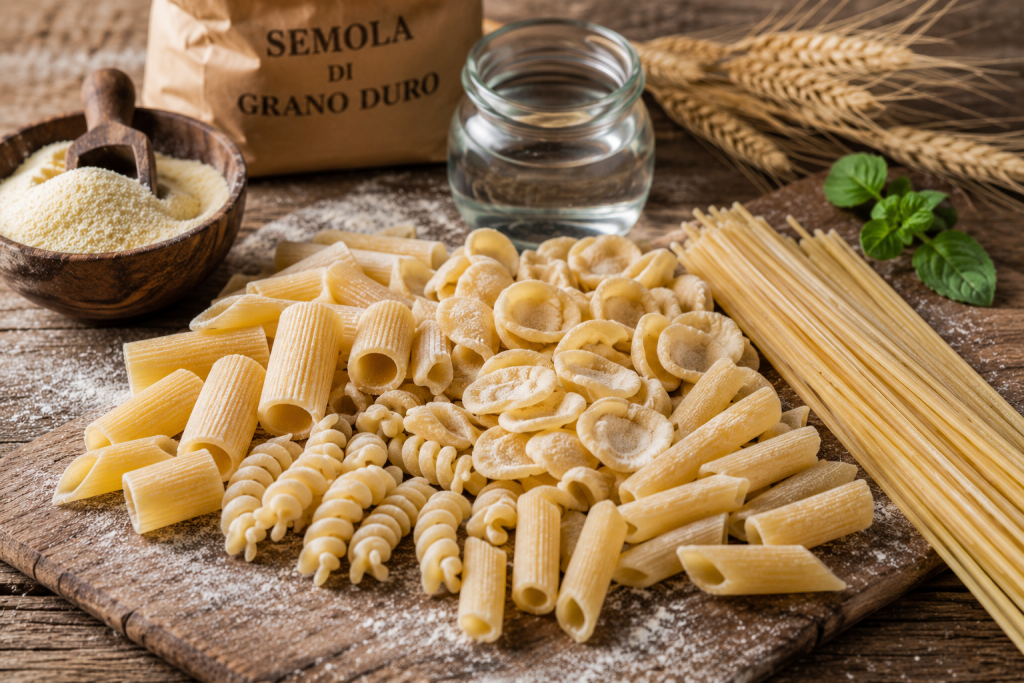
Further south, however, conditions were much different. The hotter, drier climate favored durum wheat rather than soft wheat. Water was often more valuable than eggs, and families learned to make beautiful, durable pasta using only durum semolina flour and water.
Neither tradition was “better.”
Each evolved because it perfectly suited its environment.
Northern Italy: The Land of Egg Pasta
Northern Italy’s rich agricultural regions—such as Emilia-Romagna, Piedmont, Lombardy, and Veneto—became famous for luxurious egg pasta.
Here, fertile farmland supported dairy cows, chickens, butter, cheese, and fresh eggs. These ingredients naturally found their way into local cooking.
Egg pasta offers several distinctive qualities:
- Rich golden color
- Soft, silky texture
- Tender bite
- Excellent elasticity
- Ideal for rolling into very thin sheets
Because it is pliable, egg dough became the perfect foundation for many of Italy’s most beloved stuffed pastas.
Some famous northern egg pastas include:
- Tagliatelle
- Lasagne
- Tortellini
- Agnolotti
- Cappelletti
- Pappardelle
- Tajarin
Many of these pastas pair beautifully with rich meat ragùs, butter sauces, mushrooms, cream, and truffles—all ingredients that were abundant in northern Italy.
Southern Italy: The Kingdom of Semolina
Travel south toward Puglia, Calabria, Basilicata, Sicily, Campania, and Sardinia, and you’ll notice something different.
Many traditional pastas contain no eggs whatsoever.
Instead, cooks rely on just two humble ingredients:
- Durum semolina flour
- Water
That simplicity is intentional.
Durum wheat contains more protein than softer wheats, allowing the dough to develop strength even without eggs.
The result is pasta that is:
- Firmer
- Chewier
- Better at holding its shape
- Excellent for drying
- Perfect for hearty sauces
Many southern pasta shapes were designed to capture rustic tomato sauces, olive oil, vegetables, legumes, seafood, and cheeses rather than rich butter-based preparations.
Classic southern shapes include:
- Orecchiette
- Cavatelli
- Busiate
- Trofie (Liguria bridges the north and south in many traditions)
- Fusilli al ferretto
- Lagane
- Sagne
- Scialatielli (which is a more modern exception containing milk and sometimes egg)
These pastas celebrate simplicity while showcasing incredible craftsmanship.
Eggs Were Once a Luxury
One of the biggest reasons egg pasta wasn’t universal is surprisingly practical.
Eggs were valuable.
For centuries, most Italian families lived modestly. Chickens produced only a limited number of eggs, and those eggs often served many purposes:
- Feeding children
- Baking bread
- Making desserts
- Selling at market
- Trading for other necessities
Using six or eight eggs solely for pasta wasn’t always realistic.
Water, however, was free.
By combining locally milled semolina with water, families could produce large quantities of filling, nutritious pasta using ingredients they always had on hand.
This wasn’t a compromise.
It became a culinary identity.
Different Flour, Different Dough
Another major factor is the type of wheat itself.
Northern Italy traditionally grew softer wheat varieties that produced finely milled “00” flour.
Soft wheat alone doesn’t create a particularly strong pasta dough.
Eggs solve that problem by adding:
- Protein
- Fat
- Elasticity
- Structure
Southern Italy, on the other hand, specialized in durum wheat.
Durum semolina naturally provides:
- High protein
- Excellent gluten development
- Strong dough
- Firm texture
Because of this, eggs simply weren’t necessary.
Dry Pasta Changed Everything
Southern Italy also became the birthplace of Italy’s dried pasta industry.
Semolina-and-water pasta dries exceptionally well.
Its firm structure allows it to:
- Be stored for months
- Travel long distances
- Maintain its shape during cooking
Cities like Naples eventually became world-famous for producing dried pasta, helping spread Italian cuisine across Europe and eventually around the globe.
Egg pasta, by contrast, was traditionally intended to be eaten fresh.
The Sauce Determines the Pasta
Another reason egg pasta isn’t found everywhere is that pasta was always designed alongside local sauces.
Northern Italy favored:
- Butter
- Cream
- Cheese
- Slow-cooked meat ragù
- Mushrooms
- Game meats
The delicate richness of egg pasta complements these flavors beautifully.
Southern Italy embraced:
- Tomatoes
- Olive oil
- Garlic
- Seafood
- Greens
- Chickpeas
- White beans
- Pecorino
- Ricotta salata
The firmer bite of semolina pasta stands up wonderfully to these ingredients.
Neither style exists independently—they evolved together with the foods surrounding them.
Even Within Regions, There Are Exceptions
Italian cuisine rarely follows rigid rules.
Some southern regions do have egg pastas reserved for holidays or special occasions.
Likewise, some northern regions produce semolina pastas.
Italy’s food traditions are wonderfully nuanced.
Each village often has its own customs passed down through generations.
That’s part of what makes exploring Italian pasta so endlessly fascinating.
Which Is Better?
Authentically Italian cooks would likely answer:
Neither.
The best pasta is simply the one that belongs to the dish you’re making.
A rich Bolognese almost begs for fresh tagliatelle.
A rustic tomato sauce pairs beautifully with semolina orecchiette.
A hearty bean soup shines with water-based lagane.
Fresh seafood might call for busiate or scialatielli.
Each pasta tells the story of the people who created it.
Bringing Italy’s Traditions into Your Kitchen
One of the joys of making homemade pasta is discovering that there isn’t a single “correct” dough.
Some recipes call for eggs, others for only flour and water, and both are deeply rooted in authentic Italian tradition.
At Pasta Fiore, we celebrate this incredible diversity by exploring pasta shapes and techniques from every corner of Italy. Every region has its own story, every shape has a purpose, and every recipe reflects generations of craftsmanship.
Whether you’re rolling silky egg pasta inspired by the north or shaping rustic semolina dough from the south, you’re taking part in a tradition that has been passed from one kitchen to the next for centuries.
The beauty of Italian pasta isn’t found in following one recipe—it’s found in understanding the history, culture, and people behind every shape you create.