

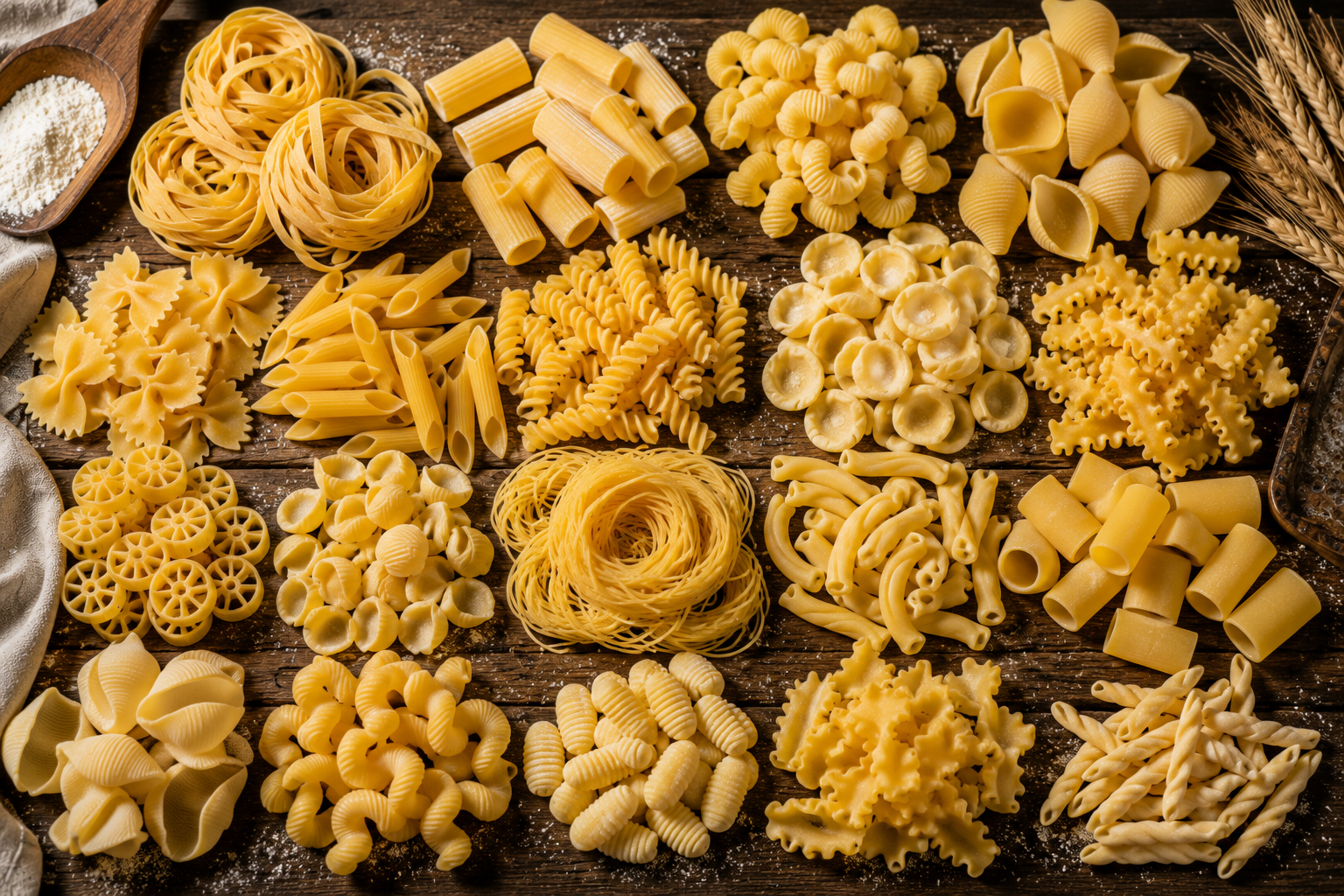
Why Pasta Shapes Matter More Than Most People Think
To someone unfamiliar with Italian cooking, pasta shapes might seem like little more than creative designs.
After all, isn’t pasta just… pasta?
Not quite.
In Italy, every shape exists for a reason. Some cradle thick meat sauces, others trap tiny vegetables, while delicate ribbons are designed to gently coat themselves with butter or cream. Choosing the right shape isn’t just tradition—it’s good cooking.
Pasta Is Designed to Hold Sauce
Every curve, ridge, fold, and hollow serves a purpose.
Ridged pasta grips chunky tomato sauces. Tubes capture bits of vegetables and meat. Twisted shapes cling to pesto. Tiny pasta disappears into soups while still adding texture.
The goal isn’t simply to eat pasta and sauce together—it’s to make every bite perfectly balanced.
Smooth vs. Ridged Pasta
Smooth pasta allows delicate sauces to shine without overpowering them.
Ridged pasta (rigate) creates tiny pockets that catch thicker sauces, making every forkful more flavorful.
This is why penne rigate often pairs better with hearty ragù than smooth penne lisce.
Hollow Shapes
Shapes like rigatoni, paccheri, and cannelloni are built to trap sauce inside.
As you bite into them, the filling and sauce release together, creating layers of texture in a single bite.
Twists and Spirals
Spiraled pasta such as trofie and fusilli wrap themselves around pesto, vegetable sauces, and creamy dressings.
Their curves increase surface area, allowing more sauce to cling naturally.
Tiny Pasta
Small shapes such as anellini, stelline, and ditalini are designed for soups and broths.
Instead of overwhelming the dish, they become part of the spoonful.
Delicate Egg Pasta
Long ribbons like tagliatelle and pappardelle aren’t meant for watery sauces.
Instead, they gently carry butter, mushrooms, cream, or slow-cooked ragù, creating elegant bites where pasta remains the star.
There Is No “Best” Pasta Shape
Each shape was created to solve a culinary problem.
Understanding why a shape exists transforms pasta from simply a meal into an appreciation of centuries of regional Italian craftsmanship.
The next time you choose pasta, think beyond appearance. Consider how that shape was designed to interact with the sauce, and you’ll discover why Italians have created hundreds of unique pasta shapes over generations.